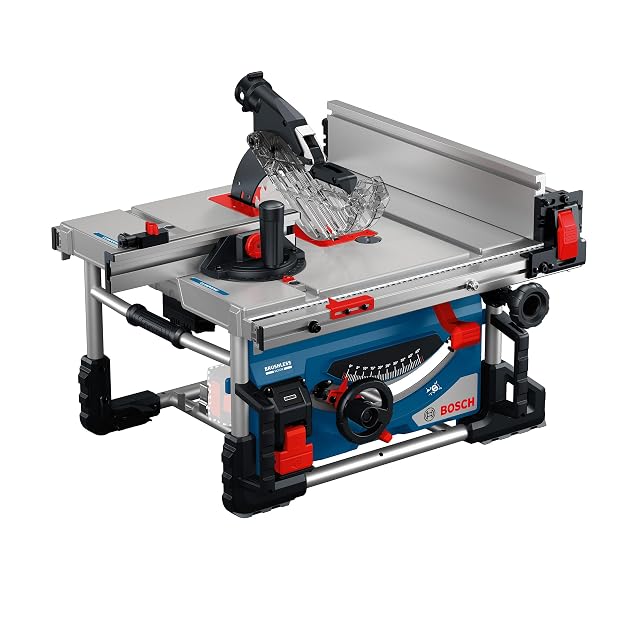
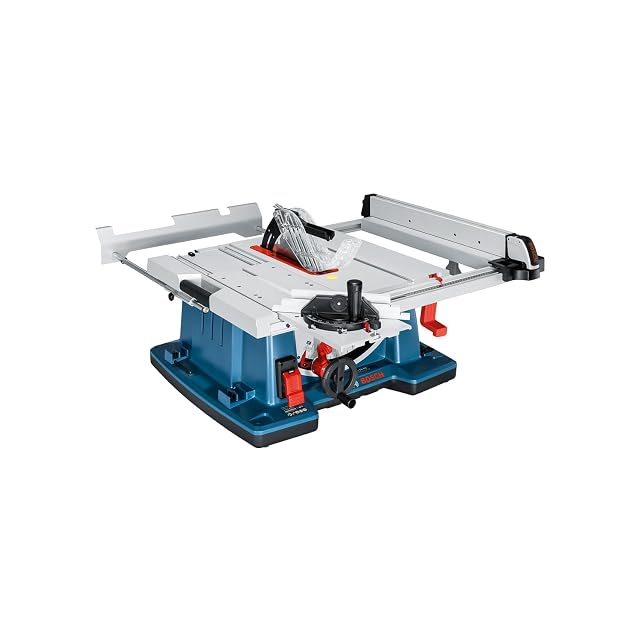
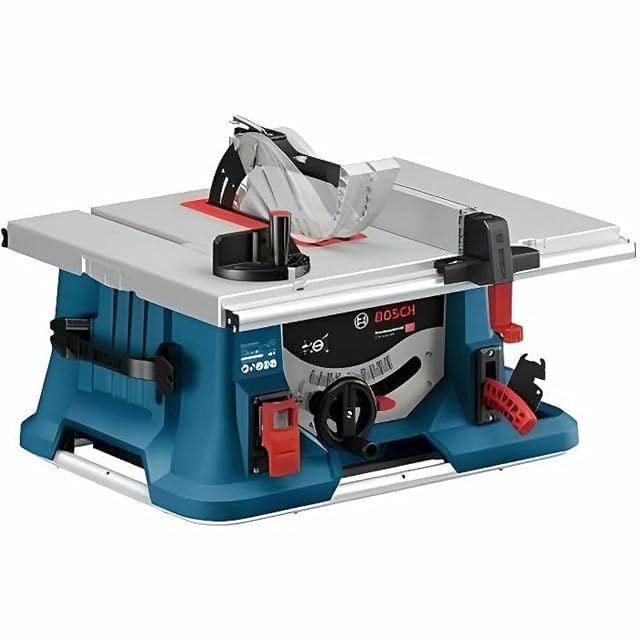
The bottom line The compact saw to buy if the fence is what you care about — and the one to skip if you need to rip anything thick.
Hands-on testing pending. Nothing below is presented as our own
measurement. Every figure is a manufacturer specification, read off the
listing itself, and the judgements are ours — drawn from how the
specification behaves in this class of machine and from what long-term
owners consistently report. Where a figure is missing, we say so rather
than fill it in.
What the specification says
210 mm blade, 1 850 W, 65 mm maximum cut. A rip fence driven by rack and pinion,
guided on both sides, with an eccentric locking lever. An AirLock-compatible
extraction port. Blade, push stick and assembly tools in the box.
The fence, again
Two saws on this page have solved the fence problem, and they have solved it in
different ways. Metabo clamps at both rails. DeWalt drives both ends of the
fence off a single rack-and-pinion, so moving it keeps it parallel by mechanism
rather than by careful locking.
In practice the rack-and-pinion is the more pleasant of the two to use — you
turn a knob and read the scale, rather than nudge, lock and check — and it is
the reason this saw is worth its premium over the compact machines it competes
with. What it cannot do is make a 210 mm blade cut deeper.
The capacity ceiling
65 mm. That handles sheet material, trim, and softwood laid flat. It does not
handle 75 mm stock on edge, and it will not rip a thick hardwood blank. This is
the trade you accept for a saw that weighs what this one weighs, and it is
sharper here than on any other machine on this page.
The extraction detail that is not a detail
An AirLock port is a twist-lock rather than a push-fit. Every push-fit hose
eventually vibrates off, and the failure is silent: the extractor keeps running,
the noise is unchanged, and the fine dust that the whole system exists to
capture goes into the room instead. A connector that latches removes an entire
category of quiet failure.
Availability
Resolves on the German, British, French, Italian and Spanish stores under one
reference and one EAN. Not listed on amazon.com under this reference — American
readers are sent to a local search.
What we like, and what we don't
Strengths
Rack-and-pinion fence guided on both rails — it cannot pivot the way a single-clamped fence does
AirLock connection, so the hose stays on the port instead of falling off mid-cut
Genuinely compact and light
A push stick in the box, which more saws should do
Compromises
210 mm blade and 65 mm of cut is the smallest capacity on this page
Small table, so any panel work needs outfeed support
Not sold on amazon.com under this reference
Specifications
Blade diameter
210 mm
Maximum cut
65 mm
Motor
1 850 W
Rip fence
Rack-and-pinion, guided on both sides, eccentric lock
Extraction
AirLock-compatible port
Supplied with
Blade, push stick, assembly tools
Amazon reference
B07YYTDK1D (identical on 6 markets)
EAN
5035048723371
Questions people actually ask
Rack-and-pinion or double clamping — which fence is better?
They solve the same problem differently. Double clamping locks a fence at both ends after you position it; rack-and-pinion drives both ends together so it never leaves parallel in the first place. Both are far better than a fence that clamps at the near rail only, which is what you get on most saws under this price.
What is AirLock and does it matter?
A twist-lock connector between the machine port and the extraction hose. It matters more than it sounds: a friction-fit hose works its way off under vibration, usually without being noticed, and an extractor running with the hose on the floor collects nothing at all while sounding exactly as though it is working.